Many students are hearing this term everywhere—Pay Per Click. Some of you might be learning it in college, some through online courses, and some out of curiosity about digital marketing. This blog is for students who want a simple explanation without unnecessary complexity.
What Is Pay Per Click?
Let’s start with the basic question: What is Pay Per Click?
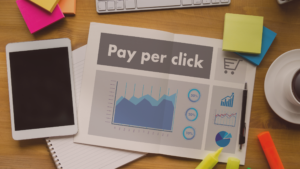
It’s an advertising method where companies pay only when someone clicks their ad. That’s it. No confusing theory. When a person clicks, the advertiser pays a small cost. Businesses use PPC because it brings quick traffic, and students prefer learning it because the results are visible instantly.
Understanding Pay Per Click
So, how do you actually wrap your head around PPC? Understanding Pay Per Click is about more than definitions—it’s about strategy. Which audiences will click your ad? When should your ad show up? How do you make your tiny budget go further than anyone expects?
I remember when I ran my first campaign on Google Ads, I was totally lost. All those abbreviations—CPC, CTR, quality score—made no sense. I figured things out by experimenting, seeing what clicks actually worked, and learning from the mistakes along the way.
Key Elements and Principles of Pay Per Click
If you want to get serious about PPC, you need to know the key elements and principles of Pay Per Click. First, targeting. You can’t just throw ads into the internet void and hope someone bites. Just understand your people a bit… what they enjoy, what they scroll past, and the time they’re most active.
After that, look at your keywords. Using the wrong ones means fewer people will click your ad. Combine good keywords with straightforward headlines and action prompts, and you’ll start seeing results.
And honestly, you can’t just start a campaign and expect it to behave. You have to keep an eye on it — adjust the bid a bit, rewrite a line that feels off, swap an image when it stops pulling attention. It’s almost like fixing things in your room: you move one small thing and suddenly everything looks better. PPC works the same way.
Why Students Should Learn Pay Per Click
Now, why is this relevant for us students? Well, digital marketing isn’t slowing down anytime soon. Learning PPC gives you practical skills that colleges don’t always teach. It’s not just about clicks or money—it’s about learning how to think strategically, analyze results, and make decisions that actually matter in the real world.
Here’s a small story:I had a friend in college who started Google Ads with only $10 to learn the ropes. Within weeks, he drove real traffic to a small business, learned the ins and outs of campaigns, and ended up getting an internship offer because of that experience. Imagine learning by doing instead of just reading theory—that’s the power of PPC.
Wrapping It Up
Honestly, Pay Per Click isn’t just another fancy term people throw around in marketing classes. Once you actually understand what is Pay Per Click and get a grip on the key elements and principles of Pay Per Click, you start seeing how powerful it really is.
You don’t need a massive budget or some expert-level knowledge on day one. Just try something small. Mess up. Fix it. Then mess up again. That’s literally how everyone learns PPC in the beginning.
And who knows—maybe the first tiny campaign you run, the one you probably won’t even be confident about, ends up opening a door you never expected. Sometimes one click really does change everything.