On-page SEO is often treated as a basic requirement. Once titles are written, keywords added and headings structured, many websites assume the work is done. From the outside, everything appears correct. Yet rankings stay where they are.
This usually isn’t because on-page SEO is missing. It’s because small mistakes quietly weaken the page. These issues don’t cause penalties, but they do affect how clearly a page communicates its purpose.
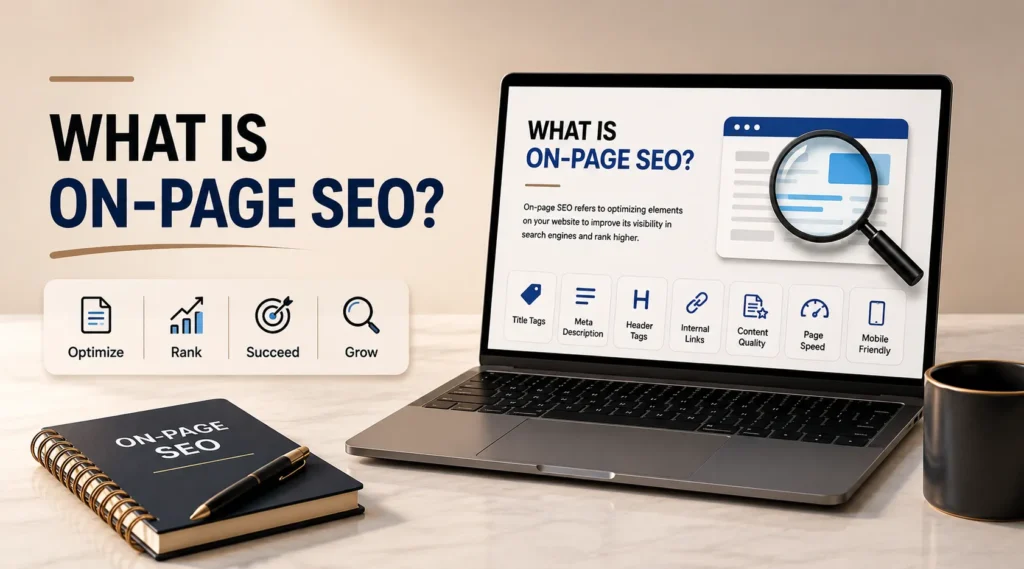
Understanding these common on-page SEO mistakes helps explain why many pages fail to move forward, even after consistent effort. This becomes easier to see once the fundamentals of how on-page SEO actually works are clear.
1. Trying to Rank One Page for Too Many Ideas
This is where most on-page SEO problems begin.
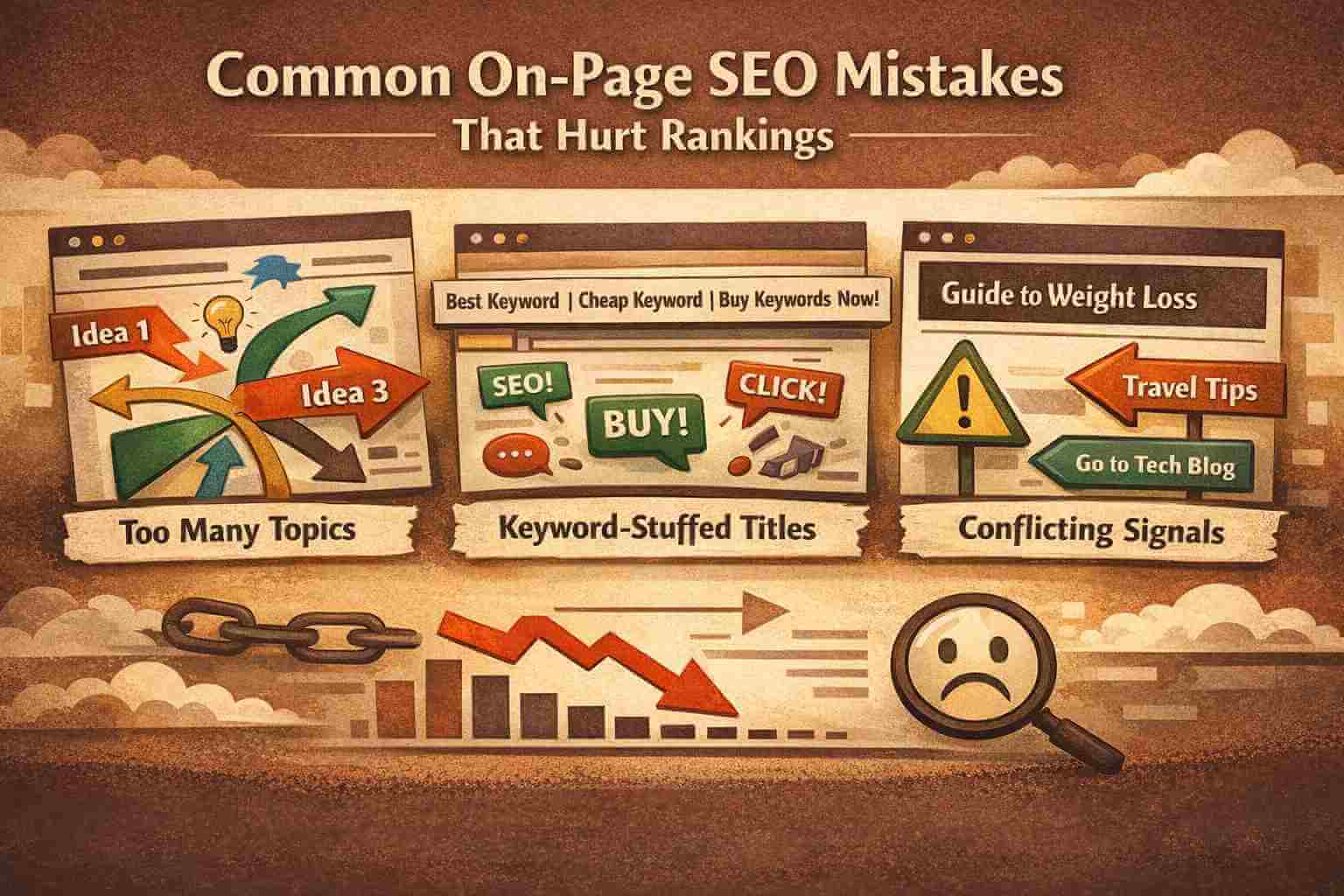
A single page often tries to explain a concept, answer a question, compare options and still push for conversion. Each section may make sense on its own, but together they dilute the page’s focus.
Search engines look for commitment. When a page doesn’t clearly prioritize one intent, relevance weakens. As a result, the page struggles to rank meaningfully for anything.
In real projects, pages usually struggle not because elements are missing, but because focus gets diluted over time.
Clarity almost always performs better than coverage.
2. Writing Titles That Chase Keywords Instead of Meaning
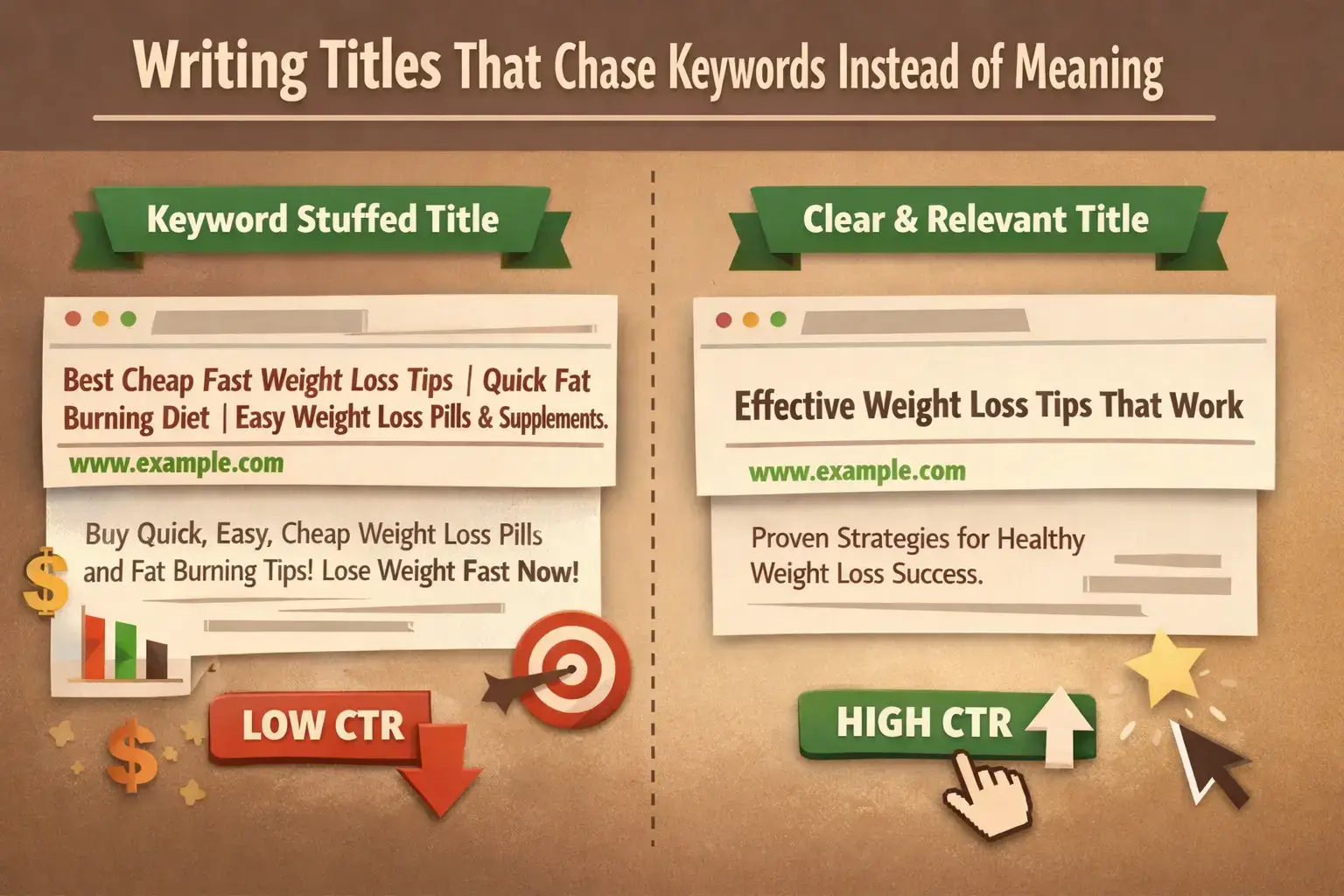
Titles are one of the strongest on-page signals, yet they are commonly overworked.
In an attempt to rank for multiple variations, titles become long, crowded and unclear. While the keywords are present, the meaning gets lost. This affects both relevance and click behavior.
A useful title is easy to understand at a glance. If it feels difficult to explain what the page is about after reading the title, the signal is already weak.
3. Using Headings Only to Break Text
Headings often exist for visual comfort, not structure. They break paragraphs, but they don’t guide understanding.
From an SEO perspective, headings define how ideas relate to each other. They help search engines see which points support the main topic and which sections are most important.
Generic or disconnected headings often make a page feel scattered, even if the content itself is well written.
4. Misreading Search Intent
Search intent issues are subtle, but their impact is significant.
A page may be informative and accurate, and still fail, because it doesn’t match what users expect when they search. Some queries require explanation. Others require direction. When the content doesn’t match that expectation, engagement drops.
Search engines notice this through behavior, not opinions. Pages that don’t align with intent slowly lose visibility, even if they are technically optimized.
5. Placing Keywords Without Supporting Meaning
Keywords are still important. But when they appear without context, they stop helping.
Many pages include keywords correctly, yet still feel vague. This happens when the surrounding content doesn’t clearly explain or reinforce the topic. Search engines evaluate the full picture, not individual placements.
If a page becomes unclear when the keyword is removed, it likely depends too much on placement instead of explanation.
6. Adding Length Instead of Direction
Longer content often feels safer, but length alone doesn’t create relevance.
Pages that try to answer every related question often drift away from their original purpose. Over time, this weakens topical focus. Search engines recognize this drift and respond cautiously.
Depth works only when it stays aligned. When it doesn’t, clarity is lost.
7. Treating Internal Links as Navigation Only
Internal links are frequently added for usability, not relevance.
From an SEO point of view, internal linking helps establish relationships between topics. It shows which pages matter and how authority flows across the site.
Pages that lack meaningful internal links often underperform, even when their content is strong. Without context, they remain isolated.
These issues become easier to spot once the fundamentals of on-page SEO are clearly understood and applied consistently.
8. Allowing Signals to Contradict Each Other
On-page SEO also fails when signals don’t agree.
This happens when titles suggest one focus, headings suggest another and internal links point elsewhere. None of these elements are wrong by themselves, yet together they create confusion.
Search engines don’t resolve conflicts. They respond by lowering confidence. Low confidence leads to unstable rankings. This is a common reason why many websites struggle to rank consistently.
9. Keeping Content That No Longer Supports the Goal
Not every on-page issue comes from missing elements. Some come from excess.
Pages collect extra sections over time—added for length, completeness or outdated intent. These sections weaken focus and distract from the main topic.
Removing content often improves clarity faster than adding more.
10. Treating On-Page SEO as a One-Time Task
Finally, on-page SEO is often approached as a setup task.
Once implemented, it’s rarely revisited. But search behavior changes. Competition evolves. Content expectations shift. Pages that don’t adapt gradually lose relevance.
On-page SEO works best as a process of refinement, not completion.
Conclusion
Most on-page SEO mistakes are not dramatic. They are quiet, cumulative and easy to overlook.
Pages don’t fail because SEO is ignored. They fail because intent drifts, structure weakens and clarity fades over time. Addressing these common on-page SEO mistakes restores focus and improves how pages are understood.
Most ranking issues are not technical failures. They are clarity failures that build up quietly.
When intent and structure are unclear, search engines hesitate to rank the page.
FAQs
1. What are on-page SEO mistakes?
On-page SEO mistakes are related to content, structure, or intent issues that prevent search engines from clearly understanding a page.
2. Why do on-page SEO mistakes hurt rankings?
They reduce clarity. When intent and structure are unclear, search engines hesitate to rank the page.
3. Are on-page SEO mistakes common?
Yes. Many websites apply basic optimization but overlook focus, intent and consistency.
4. Can fixing on-page SEO mistakes improve rankings?
Yes. Removing confusion often improves how a page performs, especially in competitive searches.
5. Do beginners make more on-page SEO mistakes?
Beginners often follow steps without context, which can lead to weak results.