Search engines try to understand why a user searches for something, not just what they type. This idea is often explained through search intent, which focuses on the purpose behind a query. When content matches that purpose clearly, it becomes easier for search engines to place it in the right results. Search intent optimization is mainly about alignment—between the topic, the structure of the page, and the user’s expectation.
In simple terms, content should answer what the searcher is actually looking for, without stretching into unrelated areas. Many ranking issues come from good content written for the wrong intent. This is why SEO Off Page Optimization Basics for Long Term Growth often connects back to on-page clarity and intent matching. Understanding search intent optimization helps create pages that feel relevant, readable and naturally useful for learners.
What Is Search Intent
Search intent explains the purpose behind a user’s search query. It explains what the user wants to achieve at that moment. Some users want information, some want to compare options and others want to take action.
Understanding what is search intent helps avoid confusion while writing content. Instead of relying only on keywords, intent looks at the expected outcome of the search. A page may be written well but still perform poorly if it addresses a different question than the user is seeking.
From an editorial perspective, search intent acts like a direction marker. It helps decide tone, depth and format before writing even begins. This makes search intent optimization more about planning than fixing content later.
Why intent matters for content clarity
When intent is clear, content becomes easier to structure. Headings stay focused, explanations stay relevant and unnecessary sections can be avoided. This clarity improves both readability and search alignment.
Types of Search Intent
Search queries generally fall into a few clear intent categories. Recognizing these types of search intent helps decide what kind of content should be created.
Informational intent
The user wants to learn or understand something. These searches often include words like “what,” “how” or “why.” Blog posts, guides and explanations usually fit here.
Navigational intent
The user is trying to visit a particular website or webpage. Content optimization plays a limited role here, as the brand or page name matters more.
Commercial intent
The user is evaluating different options before deciding. Such searches commonly include terms like “best,” “vs” or “review.”
Transactional intent
The user is ready to take action, such as buying or signing up. Product pages usually match this intent.
Knowing these types of search intent prevents mixing purposes. For example, an informational article should not behave like a sales page. Keeping intent pure supports cleaner search intent optimization.
How Search Intent Affects Content Structure
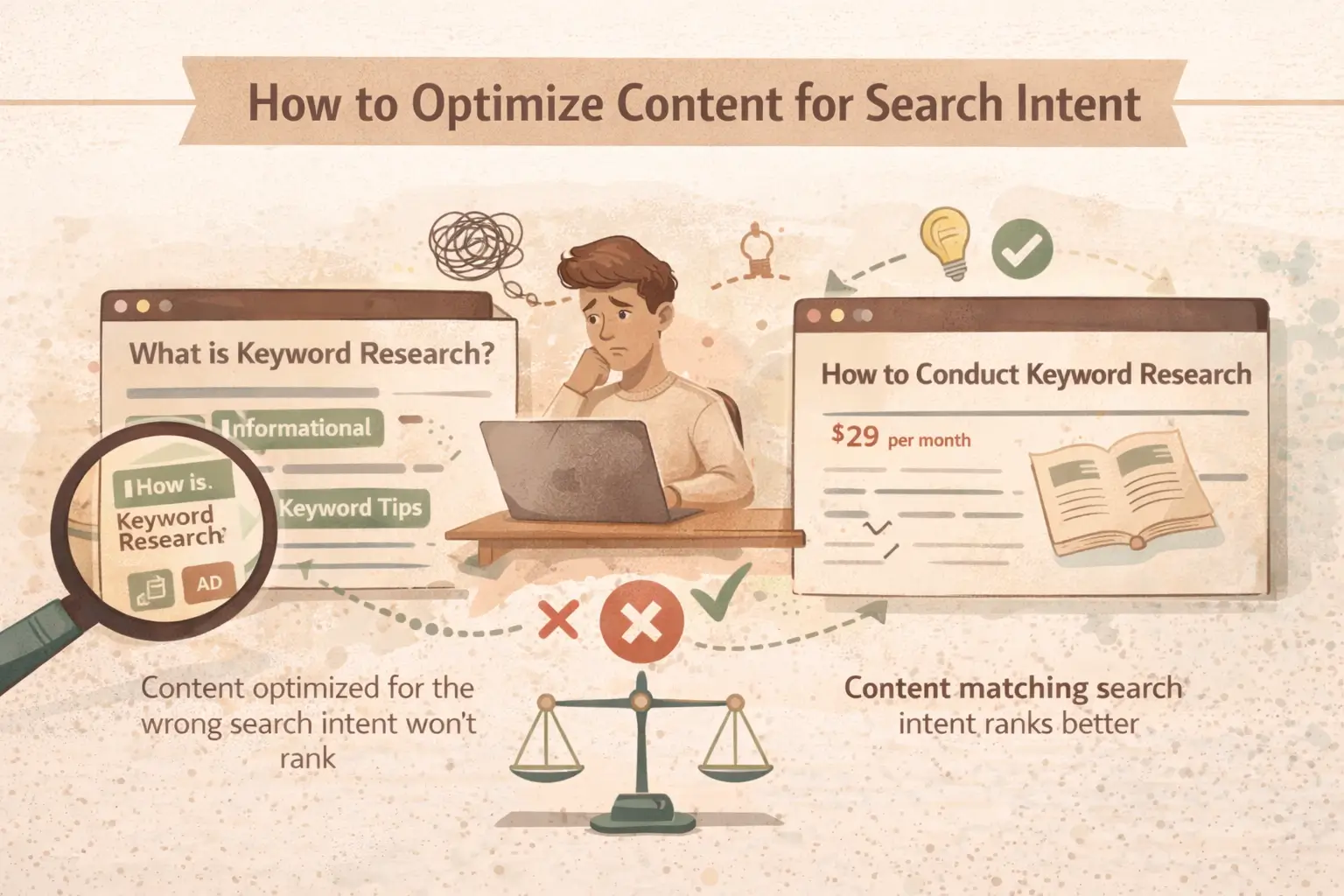
Search intent directly shapes how content should be organized. An informational page usually needs clear explanations, definitions and logical flow. A commercial page needs comparisons and decision-support details.
When structure does not match intent, users often leave quickly. This is not always because the content is bad, but because it does not meet expectations. Search engines pick up on this mismatch over time.
A helpful reference point for this difference is the concept explained in Informational vs Commercial Content: What to Publish When. It highlights how intent decides not just wording, but also layout and depth.
From a learner’s viewpoint, aligning structure with intent makes writing simpler and more focused.
Common Search Intent Optimization Mistakes
Search intent optimization often fails due to small but repeated mistakes.
One common issue is targeting broad keywords without checking the dominant intent in search results. Another is mixing multiple intents on a single page, which creates confusion. Overloading informational content with promotional sections also breaks intent alignment.
Sometimes content is written correctly but framed wrongly. For example, a topic meant for beginners may be written with advanced assumptions. This again creates a gap between user need and content delivery.
Avoiding these mistakes does not require advanced tools. It mainly requires observing search results and understanding how similar pages approach the same query.
Aligning Content With User Expectations
What users expect is often based on what they notice in search results. Page titles, descriptions, and formats together indicate the kind of response the content is likely to provide.
To align content properly, it helps to look at top-ranking pages and note patterns. Are they lists, explanations or comparisons? Are they short or detailed? This observation-based approach supports search intent optimization without copying content. Google’s official guidance in Google Search Central also emphasizes relevance and user-focused content as central ranking considerations.
For sites like Social Emage, this alignment matters because clarity builds consistency over time. When users find what they expect, trust develops naturally, even without strong authority signals.
Conclusion
Search intent optimization is centered on understanding user needs and aligning content with them instead of depending purely on tactics. By shaping content around user purpose, pages feel clearer and easier to navigate. Learning what is search intent and recognizing different types of search intent helps prevent common structural and editorial mistakes..
Instead of forcing keywords into content, focusing on intent creates a more natural flow. Over time, this approach supports steady improvement and better relevance. For learners working on content quality, search intent optimization offers a practical way to write pages that feel balanced, focused and easier to understand.
FAQs
1. What does search intent actually mean in SEO?
It points to the purpose behind a search, not the words alone. The focus is on what the user expects to find, whether that is information, comparison or action, and shaping content to match that expectation clearly.
2. How do you identify search intent before writing content?
Looking at current search results usually gives enough signals. Page formats, content depth and repeated patterns show what type of answer Google is favoring for that query.
3. Can content rank if it targets the wrong search intent?
Rankings may appear briefly, but they rarely hold. When users leave quickly or skip sections, it signals a mismatch and search engines gradually adjust visibility.
4. Is search intent the same as keyword intent?
Keywords hint at intent, but they are not the same thing. Intent is broader and includes context, expectations and how users want information presented, not just phrasing.
5. Does search intent change over time?
It can, especially for trending or evolving topics. What starts as informational may later shift toward comparison or action as user awareness grows.
6. What happens if one page tries to match multiple intents?
The page often feels unfocused. Sections compete with each other, clarity drops and users may not find what they came for, which weakens overall relevance.